Organic Farming Project For Class 11th & 12 CBSE
Acknowledgment
“I would like to extend my sincere gratitude to [insert names here] for their invaluable guidance and support throughout the project. I am also indebted to the farmers who provided me with insightful observations and information that helped me better understand the difficulties and advantages of organic farming. Finally, I would like to thank [insert teacher’s name] for giving me the opportunity to explore the topic of organic farming and for their constructive criticism.
Introduction
An agricultural system known as organic farming places a strong emphasis on using sustainable and all-natural techniques to produce crops. This method stands in stark contrast to conventional farming, which makes heavy use of artificial fertilizers and pesticides. Organic farming has attracted a lot of attention lately since it has the ability to slow down environmental deterioration and increase food safety. It is a farming technique that is founded on the ideas of ecological balance, healthy soil, and biodiversity.
Organic farming is not a new idea; it has been used for generations, especially in rural areas with a long history of farming. However, as people’s concerns about conventional agriculture’s effects on the environment and their health have grown, there is a resurgence of interest in it today. We shall examine the economic effects of organic farming in this essay, focusing on the Indian agriculture industry. We’ll look at the advantages and difficulties of organic farming and talk about how it can help India achieve inclusive and sustainable economic growth.
Principle
A number of concepts that support environmentally benign and sustainable agriculture are the foundation of organic farming. These guidelines consist of:
Soil health: Soil health is given top priority by organic farmers who use natural techniques to increase soil fertility and structure. Crop rotation, composting, and the use of organic fertilizers are a few examples of these methods.
Biodiversity: By utilising a range of crops and promoting the development of native plants, organic farming seeks to enhance biodiversity. As a result, an ecosystem that is robust and diversified and less susceptible to pests and illnesses is produced.
Avoiding synthetic inputs: Organic farmers stay away from artificial inputs like chemical fertilizers, insecticides, and herbicides. Instead, they employ natural techniques including crop rotation, organic fertilizers, and natural insect management.
Animal welfare: Animal welfare is also given top priority in organic farming, which gives cattle access to natural environments and feed while avoiding the use of antibiotics and growth hormones.
Sustainability: Organic farming strives to advance sustainable agriculture by minimizing environmental degradation and the use of non-renewable resources.
These guidelines allow organic farmers to grow wholesome, nutrient-dense crops with the least amount of environmental effect. In addition to being a practical substitute for conventional agriculture, organic farming may support equitable and sustainable economic growth.
History
Traditional farming methods that have been employed for many years are the foundation of organic farming. These methods, which were founded on sustainability ideals, were created with the long term maintenance of crop production and soil fertility in mind.
However, the early 20th century saw the start of the modern organic farming movement as a reaction to the drawbacks of industrial agriculture. Sir Albert Howard, a British agronomist who worked in India in the 1920s and 1930s, was one of the important contributors in the creation of organic farming. Howard created a set of guidelines known as “the law of return” after studying the ancient farming methods employed by Indian farmers. The idea behind this rule was to keep soil fertile by reintroducing all organic waste.
J.I. was another key player in the growth of organic farming. In the 1940s, American publisher and journalist Rodale launched the publication Organic Farming and Gardening. Rodale supported the idea of a “back-to-the-land” movement and encouraged the adoption of organic farming practises and cattle husbandry.
The organic farming movement gained traction in the 1960s and 1970s as people’s concerns about the effects of conventional agriculture on the environment and their health grew. To advance organic farming internationally, the International Federation of Organic Agriculture Movements (IFOAM) was established in 1972.
Organic farming is currently practised in many nations throughout the world and is seen as a crucial strategy for advancing sustainable agriculture and preserving the environment.
Status
As of 2019, there were an estimated 72.3 million hectares of land under organic cultivation, making organic farming a rapidly expanding segment of global agriculture. Australia, Argentina, Spain, and China are the nations with the largest agricultural land areas devoted to organic farming.
With an anticipated 1.5 million hectares of land under organic cultivation as of 2021, organic farming is also expanding in India. The National Programme for Organic Production (NPOP) and the Paramparagat Krishi Vikas Yojana (PKVY), both of which aim to encourage organic farming among small and marginal farmers, are two of the measures that the Indian government has initiated to do so.
There are a number of benefits to organic farming over traditional agriculture. It encourages soil fertility and health, lessens pollutants, and can lessen the effects of climate change. Additionally, organic crops don’t contain any dangerous chemicals, which is good for people’s health.
Organic farming, though, too has its share of difficulties. Contrary to conventional agriculture, it may require more labour and occasionally produce lower yields. Careful management is also necessary in organic farming to stop the spread of pest and disease outbreaks.
Despite these difficulties, it is anticipated that the organic farming industry will expand in the years to come as consumers’ interest in food produced sustainably grows.
Benefits
Following are a few advantages of organic farming:
Healthier food: Synthetic pesticides and fertilisers are avoided in organic farming since they can leave toxic residues on crops. Additionally, organic produce frequently has higher levels of vitamins and antioxidants.
Environmental advantages: Organic farming helps to minimise pollution, improve soil health and biodiversity, and lessen the effects of climate change. Additionally, it can aid in reducing the use of non-renewable resources and safeguarding wildlife habitats.
Benefits to the economy: Organic farming can help the economy for farmers by lowering their dependency on pricey synthetic inputs and encouraging inclusive, sustainable growth. Small-scale farmers and nearby communities may also see new opportunities as a result.
Improved animal welfare: Animal welfare is improved by organic farming, which doesn’t utilise antibiotics or growth hormones, and gives cattle access to natural environments and feed.
superior flavor: Due to the fact that organic produce is frequently produced in more natural and diverse conditions than conventionally farmed produce, many people believe that it has a superior flavour.
In general, organic farming is quite advantageous for both humans and the environment. Organic farming has the potential to contribute to the development of a more resilient, equitably distributed, and sustainable food system for all people.
Cost-effectiveness
Organic farming may have higher upfront expenditures than traditional agricultural techniques, but it might be more cost-effective in the long run. Instead than using synthetic fertilisers and pesticides, which can be costly, organic farming relies on organic techniques like crop rotation and composting.
However, compared to conventional farming, organic farming may necessitate more labour and management, which could raise costs in the short term. In some circumstances, yields can also be reduced, which could have an impact on profitability.
Despite these difficulties, many farmers have discovered that organic farming has the potential to be lucrative in the long run, particularly if they have access to high-end markets that value organic produce. In rare circumstances, government grants or certification programmes that promote sustainable agriculture may also be advantageous to organic producers.
Overall, a number of variables, such as soil quality, climate, labour availability, and market demand, affect how cost-effective organic farming is. Contrary to conventional farming, organic farming may have higher initial costs, but it can have long-term advantages for both farmers and the environment.
Profitability
Farmers can make money from organic farming, but it takes careful management and market analysis. When compared to conventionally grown produce, organic produce frequently commands higher prices, which can boost profitability.
However, organic farming can also require more labour and may incur extra costs for marketing and certification. To comply with the criteria of organic farming, farmers might need to make investments in machinery like composting facilities.
In spite of these difficulties, a lot of farmers have discovered that organic farming may be lucrative, particularly if they have access to high-end markets that value organic produce. Farmers may gain from government grants or accreditation programmes that promote sustainable agriculture.
Organic farming can help farmers indirectly as well as directly, such as through improving soil health and biodiversity, reducing the pressure from pests and diseases, and improving access to high-end markets.
Overall, a number of variables, including as market demand, production costs, and farm management techniques, affect how profitable organic farming is. While investing in organic farming may be more expensive than in conventional farming, there are potential long-term advantages for both farmers and the environment.
Market Demand
The market has seen an increase in demand for organic produce recently as customers’ interest in environmental sustainability and good health grows. The US market for organic food increased by 12.4% to $56.4 billion in 2020, according to the Organic Trade Association.
Farmers who practise organic farming may have access to niche markets that prioritise environmentally friendly and sustainable agriculture. When compared to conventionally grown produce, organic produce frequently commands higher prices, which can boost profitability.
However, it may also be necessary to make additional investments in labour, certification, and equipment in order to meet the demands of organic farming and gain access to premium markets. Before switching to organic farming, farmers must thoroughly investigate market demand and production costs.
Organic farming can help farmers indirectly as well as directly, such as through improving soil health and biodiversity, reducing the pressure from pests and diseases, and improving access to high-end markets.
Overall, there is a rising demand for organic produce, and farmers may be able to access premium markets through organic farming, increasing their profitability. To ensure long-term success, farmers must, however, carefully control production costs and market demand.
Price Premiums
Due to customer demand for environmentally friendly and sustainable agriculture, organic product frequently costs greater pricing than produce cultivated conventionally. According to a USDA research, the cost of organic produce is often 20–30% higher than the cost of vegetables cultivated conventionally.
Depending on the fruit’s type, market demand, and location, price premiums for organic produce can change. For instance, the cost of organic vegetables may be greater in urban regions where there is a large demand for wholesome, environmentally friendly goods.
However, it might be necessary to make additional investments in labour, certification, and equipment to gain access to high-end markets for organic produce. Before switching to organic farming, farmers must thoroughly investigate market demand and production costs.
Organic farming can help farmers indirectly by improving soil health and biodiversity, reducing the strain from pests and diseases, and improving access to premium markets, in addition to offering price premiums.
Overall, price premiums for organic products can give farmers a chance to boost profitability, but to achieve long-term success, producers must carefully manage production costs and market demand.
Creating Jobs
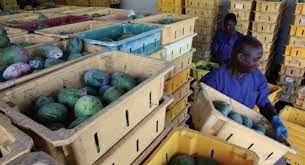
Increased labour requirements for weed and pest control, organic certification, and marketing are just a few ways that organic farming can generate jobs. Additionally, because organic farming frequently necessitates more manual labour than conventional farming, it may offer farm workers employment opportunities.
Additionally, organic farming may open up employment opportunities in related sectors like the distribution and processing of organic food. There is an increasing need for organic food processors and distributors as organic produce demand rises, which could lead to the creation of new jobs in nearby towns.
By generating new employment possibilities and boosting regional economies, organic farming can also assist rural development. A USDA study found that by producing jobs and new revenue sources, organic farming can have a positive economic impact on rural areas.
In general, organic farming can promote rural development and new job prospects. There may be more potential for employment growth in associated businesses as the demand for organic produce rises.
Generating Income

Through price premiums for organic produce and access to premium markets, organic farming can give farmers a chance to increase their income. In comparison to conventional farmers, organic farmers typically achieve higher net returns per acre.
However, switching to organic farming and getting access to premium markets may necessitate additional expenditures for labour, certification, and equipment. Before switching to organic farming, farmers must thoroughly investigate market demand and production costs.
Organic farming can help farmers indirectly as well as directly, such as through improving soil health and biodiversity, reducing the pressure from pests and diseases, and improving access to high-end markets.
By creating new revenue streams and boosting regional economies, organic farming can also promote rural development. In rural areas, organic farming generates jobs and business prospects, which can help boost local economies, according to a report by the Organic Trade Association.
In general, organic farming can give farmers a chance to boost their income and support rural development. To ensure long-term success, farmers must, however, carefully control production costs and market demand.
Conclusion
Growing worries about the effects of conventional farming practises on the environment have led to an increase in popularity for organic farming, a sustainable and environmentally friendly agricultural practise. Biodiversity, soil health, and a reduction in the use of synthetic inputs are some of the foundational tenets of organic farming, which can have numerous advantages for both farmers and the environment.
In addition to promoting rural development and job creation, organic farming can give farmers the chance to raise their revenue through price premiums and access to premium markets. However, switching to organic farming and opening up premium markets may necessitate further expenditures on labour, certification, and equipment, all of which farmers must carefully manage to ensure long-term success.
Overall, organic farming is a significant and expanding industry that has the potential to support environmentally friendly and sustainable agriculture while also benefiting farmers and rural communities economically. There may be new chances for farmers and related companies to profit from this expanding trend towards sustainable agriculture as the demand for organic produce rises.
Certificate
This is to certify that I, [Your Name], a student of Class 11/12 at [Your School Name], have successfully completed the project on “Organic Farming” as part of my CBSE curriculum. This project has provided me with valuable insights into the principles, history, and benefits of organic farming, and its potential impact on the agricultural industry and the environment.
I would like to express my heartfelt gratitude to [insert names here], who have been instrumental in guiding and supporting me throughout this project. Their encouragement and expertise have been invaluable in shaping the content and presentation of this work.
I would also like to extend my thanks to the farmers who generously shared their knowledge and experiences with me, giving me valuable insights into the challenges and advantages of organic farming.
Furthermore, I am deeply grateful to my CBSE teacher, [Teacher’s Name], for providing me with the opportunity to explore the topic of organic farming and for offering constructive feedback that helped me enhance the quality of my project.
Through this project, I have learned about the principles of organic farming, its historical development, and the current status and potential of organic farming in India and globally. I have come to understand the various benefits of organic farming, including its positive impact on soil health, biodiversity, and environmental sustainability. Moreover, I have gained insight into the economic aspects of organic farming, such as its potential to create jobs, generate income for farmers, and contribute to rural development.
Studying organic farming has made me more aware of the importance of sustainable agriculture and its potential to address environmental challenges while promoting economic growth. I am inspired by the possibilities of organic farming and its potential to contribute to a healthier and more sustainable future.
I hope that this project serves as a valuable resource for others, helping them to understand the principles and advantages of organic farming and the role it can play in creating a more environmentally friendly and economically viable agricultural system.
Date: [Date]Place: [Your City]
[Your Signature](Your Name)
Common search variants this project covers
Related searches this project answers: organic farming project, project on organic farming class 12 pdf download, organic farming project pdf class 11, organic farming project pdf, class 12 economics project file on organic farming, organic farming project file class 12, organic farming class 12, organic farming back to the nature project class 12, class 12 economics project on organic farming, economics project on organic farming class 12, organic farming economics project class 12, organic farming project class 12, what is organic farming class 12, class 12 economics organic farming project, organic farming class 12 economics project, project on organic farming, organic farming pictures for project pdf class 12, organic farming in india project pdf class 11, organic farming project pdf 2024 class 12, organic farming evs project pdf class 12, organic farming project pdf class 12, organic farming project class 12 economics, organic farming project topics, organic farming project class 11, organic farming class 12 project.
More search queries this article answers
Related searches this project answers: organic farming class 12 economics, organic farming back to the nature project class 12 ppt, organic farming in india project, project organic farming, conclusion of organic farming project class 12, class 12th economics project on organic farming, project on organic farming class 12 economics, organic farming project file, organic farming project for students, organic farming project pdf 2024, class 12 economics project organic farming, class 12 organic farming project, natural farming project pdf, organic farming back to the nature project class 12 economics, economics project class 12 organic farming, project file on organic farming class 12, project on organic farming class 12 pdf download in english, project on organic farming class 12, organic farming project ideas, organic farming project class 12 pdf, organic farming project economics class 12, organic farming back to the nature project class 12 economics pdf, what is organic farming class 11, observation of organic farming evs project, project on organic farming class 12 pdf.
Additional variants and specific page/pdf queries
Related searches this project answers: organic farming pictures for project pdf, organic farming back to the nature class 12, organic farming back to the nature project class 12 pdf free download, define organic farming class 12, write a short note on organic farming, organic farming project pdf class 11 pdf download, organic farming pictures for project, what is organic farming class 12 economics, introduction of organic farming project, national project on organic farming, organic farming back to the nature, organic farming class 12th, organic farming project introduction, organic farming project pdf class 9, organic farming back to nature, organic farming project pdf class 12 pdf download, organic farming class 12th project, organic farming projects, organic farming project for class 12, organic farming introduction for project, study the farmers who practice organic farming evs project, project of organic farming, organic farming in india project class 12 pdf, need of organic farming class 12, organic farming evs project.
Longer-tail queries this project answers
Related searches this project answers: organic farming school project, project file on organic farming, organic farming for project, project report on organic farming, class 12 economics project on organic farming back to the nature, farming project pdf, organic farming file project, cbse class 12 economics project on organic farming, organic farming images for project, agriculture project for class 12, organic farming class 11, organic farming back to the nature class 12 project, organic farming, organic farming project for school, sustainable agriculture project class 12, organic farming back to the nature project class 12 notes, organic farming project report, limitations of organic farming class 12, economics of organic farming, organic farming definition class 12, organic farming class 10, sustainable agriculture project pdf class 12, project on natural farming, organic farming back to the nature project class 12 pdf, economics project on organic farming.
Further variants covered on this page
Related searches this project answers: organic farm project, organic agriculture project, organic farming purpose, project on agriculture for class 12 pdf, organic farming practical file, what is organic farming, project work on organic farming, organic farming photos for project, conclusion of organic farming, acknowledgement of organic farming, organic farming introduction pdf, organic farming back to nature project class 12, farming project, economics project organic farming, class 12 economics project on vertical farming, economics organic farming project, organic farming project in india, organic farming project work, project on organic farming class 12 pdf economics, organic farming project for class 12 economics project slideshare, assignment on organic farming, class 12 acknowledgement for english project, natural farming project ideas, project work methodology of organic farming, project on organic farming pdf.
Extended keyword coverage
Related searches this project answers: project on organic farming class 9, pure organic farming, school project, role of organic farming in achieving sustainable development, related photos, photos, photo, organised farming, practical file, project on organic farming back to the nature, project on farming, practical file ki photo, write the advantages of organic farming, write short note on organic farming, what is organic farming how does it promote sustainable development, what is organic agriculture, short note on organic farming, what is organic farming?, write about organic farming, with pictures, why is organic farming important, organic farming wikipedia, explain what is organic farming, essay writing, eco project acknowledgement for economics project.
Remaining queries this article addresses
Related searches this project answers: i only want images, more images, introduction of organic farming, images chaiye, advantages of organic farming class 9, acknowledgement for political science project class 11, acknowledgement for commerce project, agriculture organic farming project, class 12 economics project organic farming back to the nature, class 12 economics project file on organic farming back to the nature, analysis of data of organic farming evs project, organic farming pictures for project class 12, organic farming pdf, organic farming in india pdf, organic farming project report pdf, organic farming subject, organic farming science project, organic farming project topics pdf, organic, natural farming project, natural farming, organic farming advantages, organic farming evs project pdf, organic farming class 9, organic farming back to nature class 12 project.
Hindi/Regional-language searches this project answers
For non-English readers, this project also addresses: सेंद्रिय शेती प्रकल्प सादरीकरण, सेंद्रिय शेती प्रकल्प pdf 12th, सेंद्रिय शेती प्रकल्प pdf 11th, सेंद्रिय शेती प्रकल्प pdf, सेंद्रिय शेती प्रकल्प निरीक्षणे, सेंद्रिय शेती प्रकल्प, सेंद्रिय शेती प्रकल्प निष्कर्ष pdf, जैविक खेती का प्रोजेक्ट कैसे बनाएं, आभार (acknowledgement), निष्कर्ष (conclusion), सेंद्रिय शेती पर्यावरण प्रकल्प, प्रस्तावना (introduction), परियोजना का शीर्षक.